Personal growth books selected by the problem they help solve
This is not a universal ranking or a pile of summaries. It is a starting shelf organized by use: building repeatable habits, designing direction, changing how you interpret ability, and making peace with limited time.
Reviewed July 15, 2026personal growth books
personal growth books
Four books, four different growth jobs
Official author and publisher pages confirm the scope of each title. Our notes focus on practical fit and a safe next step; they do not replace reading the work, independent reviews, or professional advice.
Habits · Systems
Source checked
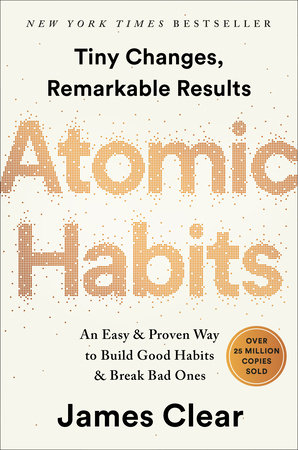
Atomic Habits
James Clear
A framework for understanding how small behaviors, cues, environment, and identity interact over time. It is most useful when the desired direction is already clear but follow-through is inconsistent.
Best for
A reader who keeps relying on motivation, sets a large daily target, or struggles to restart after a missed day.
Try this next
Choose one behavior and create a two-minute or five-minute floor attached to a cue that already exists.
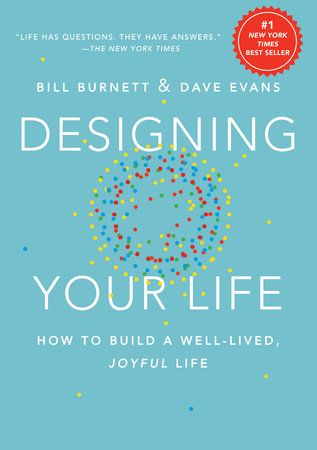
Applies design-thinking ideas to life and career questions, encouraging curiosity, reframing, multiple possible futures, and small prototypes rather than a single permanent answer.
Best for
A reader facing several plausible paths who needs information from experience rather than more abstract comparison.
Try this next
Sketch three meaningfully different next-year possibilities and identify one low-cost conversation or experiment for each.
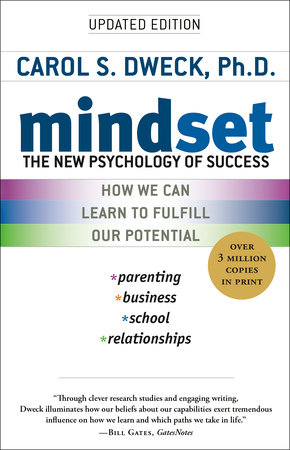
Explores how beliefs about whether abilities are fixed or developable can shape learning, effort, feedback, relationships, and response to difficulty. It offers a lens, not a demand for constant positivity.
Best for
A reader who treats one mistake as a verdict, avoids feedback, or believes being a beginner exposes a permanent limit.
Try this next
Rewrite one recent setback as observable evidence: what happened, what strategy was used, and what can be tried differently.
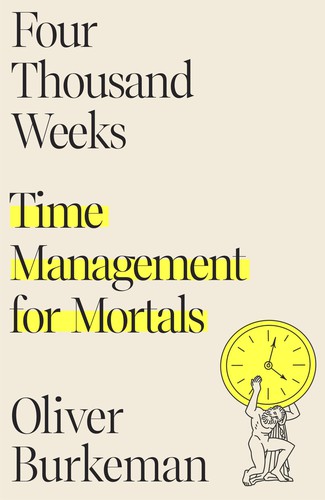
Challenges the fantasy of mastering every demand through productivity and asks how limited time changes priority, attention, patience, and what we consciously leave undone.
Best for
A reader whose optimization system keeps expanding while meaningful work, relationships, rest, or ordinary life feels postponed.
Try this next
Choose one important project to advance and one category you will deliberately allow to remain imperfect this week.
How to turn reading into personal growth without over-collecting
A personal growth book is a conversation partner, not a set of commandments. Use a reading practice that protects context, skepticism, and transfer.
01
Choose with a problem statement, not a bestseller list. Write what is happening, what you have already tried, and what kind of help you need from the book. A strong selection question might be, “How can I restart a useful behavior after an irregular week?” That is more actionable than, “Which book will transform me?” The clearer question also helps you skip chapters that do not serve the current job.
02
Read slowly enough to disagree. Notice the population, culture, work conditions, money, health, relationships, and freedom assumed by an example. Ask whether the proposed action is safe, accessible, and compatible with your responsibilities. A respected framework can contain useful distinctions and still be incomplete for your situation. Active reading preserves agency; copying the author’s entire routine gives it away.
03
Use an action margin. At the end of each reading session, write only three lines: the idea in your words, the situation where it might matter, and the smallest experiment you are willing to run. If no experiment appears, continue reading for understanding or stop without guilt. Do not build a complex note system unless retrieval is the actual problem. A visible card can outperform a perfect archive.
04
Review after behavior, not immediately after the final page. Ask what you noticed, what changed, what remained difficult, and whether the idea deserves another week. The answer may be to keep, adapt, combine, or reject it. This protects you from judging the book only by style and protects you from judging yourself by completion. Practical fit is discovered in context.
03 / personal growth books
Choose a reading mode before buying
The same title can serve different jobs. Decide how you will use it so the format and cost fit the purpose.
Library copy or sample
Choose it whenYou are testing fit, tone, level, and whether the central question matches yours.
Pause it whenYou already know you need repeated annotation or a long-term workbook.
Print or ebook
Choose it whenYou want deliberate reading, highlighting, search, and quiet review at your own pace.
Pause it whenVisual reading is inaccessible or your available attention is mostly in transit.
Audiobook
Choose it whenVoice and mobility make sustained attention easier and you can pause for notes.
Pause it whenThe material needs diagrams, exercises, or frequent comparison across sections.
Workbook or reading group
Choose it whenPrompts, practice, discussion, or accountability will improve transfer.
Pause it whenThe structure adds pressure, cost, or social exposure that does not serve the goal.
04 / Best Personal Growth
How we decide what belongs here
We use the same practical filter across articles, books, podcasts, courses, and tools. A resource should clarify a real problem, support a small action, respect limits, and remain useful after the novelty fades.
01
Clear mechanism
The suggestion explains what to do and why that action may help, without pretending one method works for everyone.
05 / personal growth books
The seven-day best personal growth system
Do not consume the whole collection at once. Choose one idea, shrink it to an observable action, and use the site’s weekly rhythm to learn whether it fits your real life.
Day 1
Name the direction
Write the change you want and why it matters in this season.
What would be different in ordinary life?
Day 2
Find the friction
Notice the moment action becomes harder and describe the setting without blame.
Was the obstacle clarity, size, cue, fear, or capacity?
Day 3
Shrink the step
Create a version that can be completed in five to ten minutes.
Does this still express the direction?
Day 4
Shape the environment
Make the cue visible and remove one avoidable obstacle before starting.
What made action easier without more willpower?
Day 5
Practice a restart
If the plan slips, resume with the smallest version at the next reasonable opportunity.
Can a miss become information rather than debt?
Day 6
Protect capacity
Pair the action with rest or remove one demand that competes with it.
What pace could coexist with the rest of life?
Day 7
Review the evidence
Record what happened, what helped, and what you will continue, change, or stop.
What is the smallest sensible next experiment?
06 / FAQ
Questions about the book shelf
Why are there only four personal growth books?
A short, differentiated shelf is more useful than an untested list of fifty. These four address distinct jobs and have stable official source pages. The library can expand after a title is checked for scope, practical transfer, limitations, availability, and overlap with what is already included.
Have you personally tested every exercise in every book?
No such claim is made. The MVP is source-checked and editorially mapped, not a long-term comparative trial. Each card separates what the official source says the book covers from our fit judgment and suggested experiment. Deeper reviews should disclose the reading and testing method.
Are purchase links affiliate links?
No. The links here go to official author or publisher pages so readers can verify the title and choose their own library, local bookseller, ebook, or audio path. If commercial links are ever added, the relationship should be disclosed clearly beside them.
Can a personal growth book replace therapy or coaching?
No. A book can offer language, exercises, stories, and general frameworks, but it cannot assess your individual condition, safety, history, or professional context. Use qualified support when the issue requires diagnosis, treatment, crisis response, regulated advice, or accountable personalized care.
Source checked
Editorial disclosure
This initial collection was source-checked against official author, publisher, university, foundation, or podcast pages on July 15, 2026. Inclusion is an editorial fit judgment, not a paid ranking, endorsement, clinical recommendation, or promise of results. We do not use star ratings in this MVP.
Personal growth material is educational. It cannot replace qualified medical, psychological, legal, financial, or crisis support.
Best Personal Growth
Continue through the library
Move to the format that matches your available attention, then return to the assessment when you want one clear next action.
Do not consume the whole collection at once. Choose one idea, shrink it to an observable action, and use the site’s weekly rhythm to learn whether it fits your real life.